
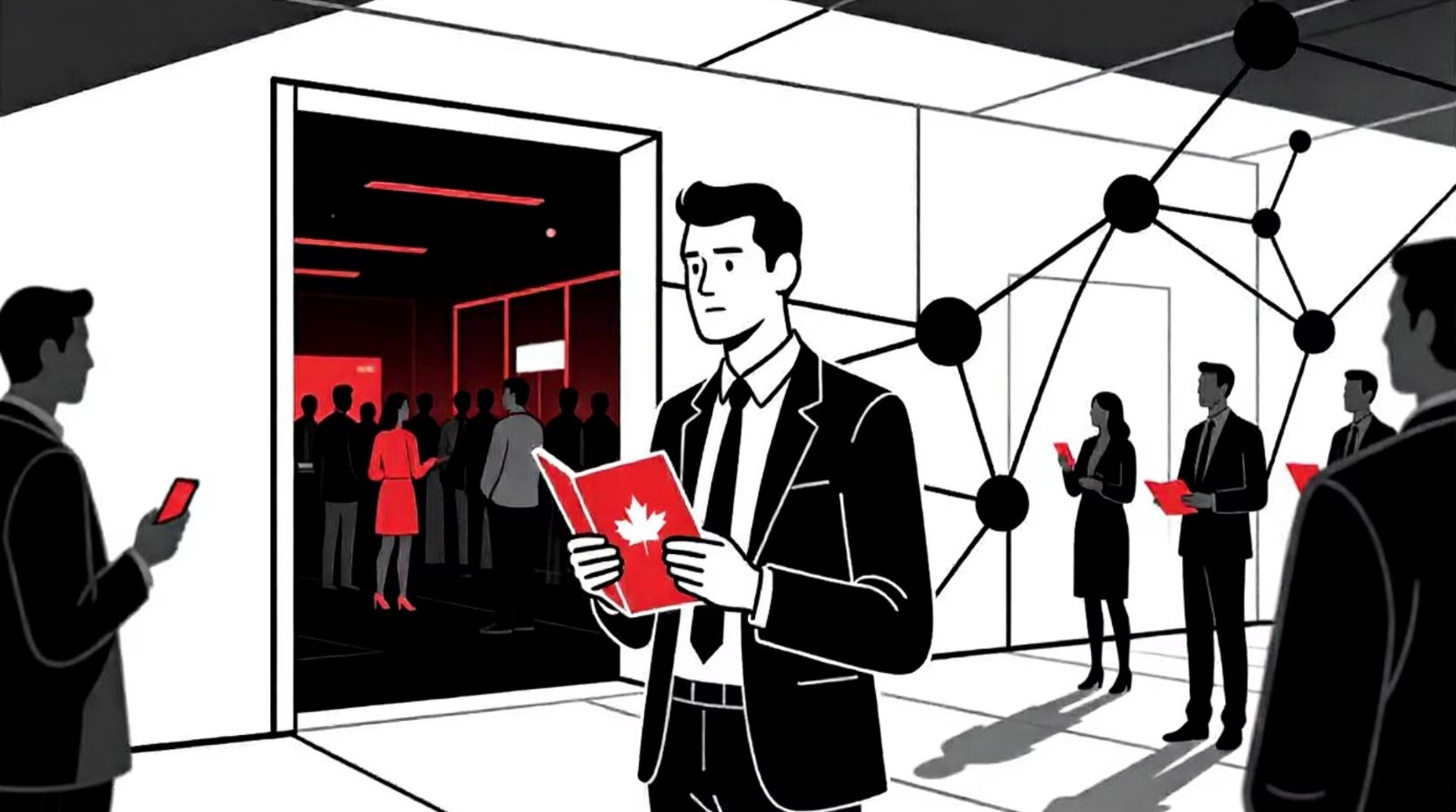
Let’s start with a feeling every professional knows: you walk into a crowded networking event, coffee in hand, scanning the room for a friendly face. The result is almost always the same—awkward small talk with the few people you already know, while dozens of potential high-value connections remain untapped.
This isn’t a personal failure; it’s a systemic one. A staggering 50% of working adults actively avoid networking despite knowing its importance, often due to social anxiety. For business owners, the stakes are even higher, with executives reporting they would lose 28% of their business if they stopped networking.
As an event organizer, leaving your members’ most desired outcome—valuable connections—to pure chance is a massive missed opportunity. This post is your playbook to become a “connection engineer.” We’ll show you how to use AI to create personalized networking pathways that generate real value for every single member.
Tactic 1: The Personalized “Top 3 to Meet” Agenda

The most powerful way to eliminate networking anxiety is to replace uncertainty with a clear plan. Instead of a generic event schedule, use AI to create a personalized “dance card” for each attendee.
The “Connection Agenda” Prompt:
Act as a business matchmaking expert. I've pasted the registration list for our upcoming networking event, including names, companies, and industries. For each attendee, generate a personalized 'Top 3 to Meet' list. For each person on their list, provide a one-sentence reason why the connection would be valuable (e.g., 'John from ABC Marketing could help you with your new website'). Format this as a series of mini-agendas I can email to each attendee before the event.Sending this personalized agenda a day before the event transforms your attendees’ mindset from passive to proactive.
Tactic 2: The “Smart Badge” Conversation Starter
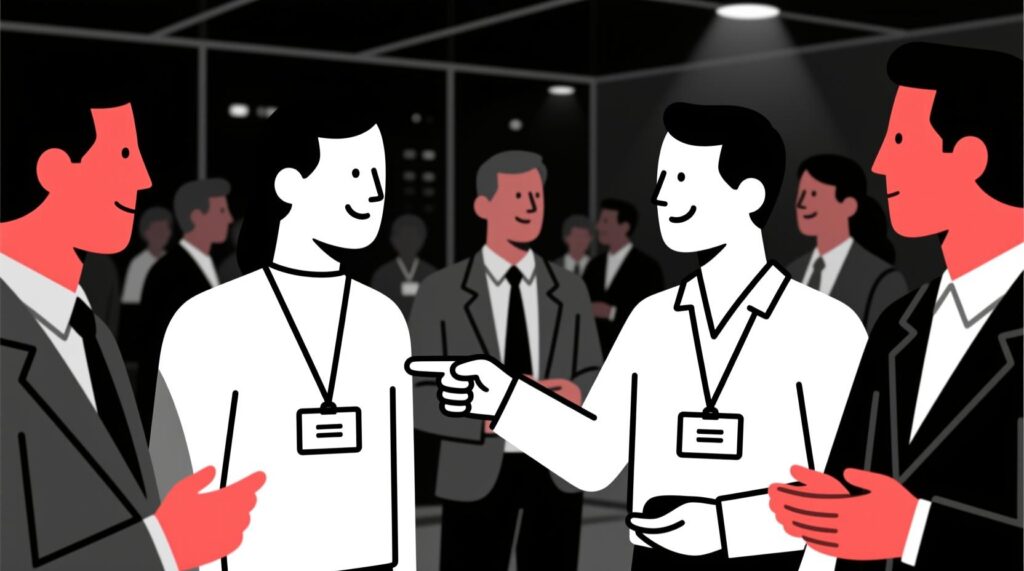
The hardest part of networking is the opening line. Make it easy for people to start the right conversations with a personalized icebreaker right on their name badge.
The “Smart Badge” Prompt:
Act as a networking facilitator. Based on our attendee list, generate a one-line 'Conversation Starter' for each person's name badge. It should be a fun, intriguing fact or question related to their industry. For a real estate agent, it could be 'Ask me about the craziest house I've ever sold.' For a web developer, 'Ask me what makes a website great.'Tactic 3: The “Table Talk” AI Prompter
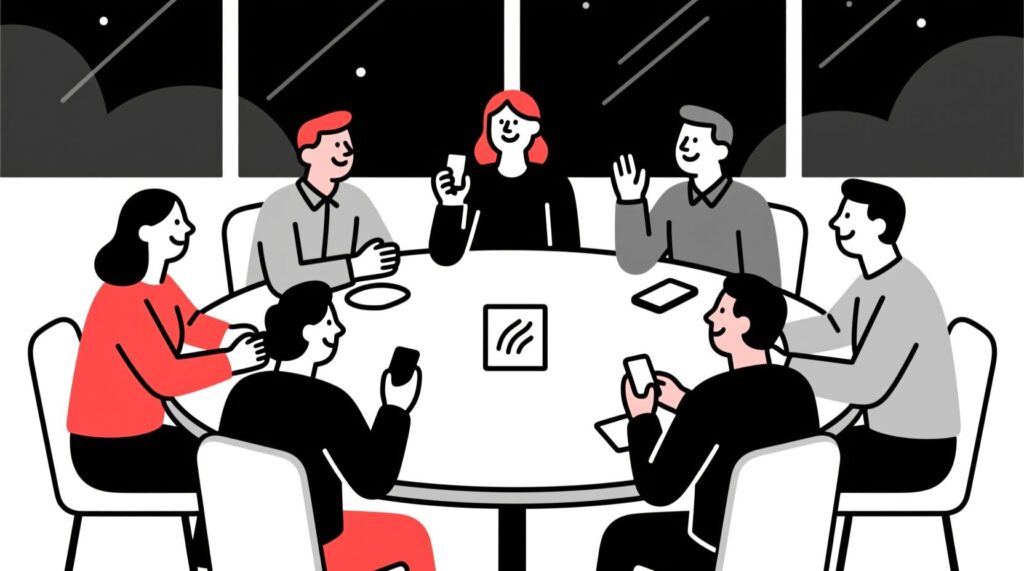
Nothing kills an event’s energy faster than a lunch table filled with silent attendees staring at their phones. Use AI to spark meaningful group conversations.
The “Table Talk” Prompt:
Act as a master of ceremonies and conversation facilitator. I need 5 thought-provoking, open-ended conversation prompts for the tables at our upcoming business luncheon. The prompts should be about [Event Theme, e.g., 'the future of our downtown core'] and designed to get a table of 8 business owners talking. They should be more interesting than "So, what do you do?"Print one prompt on each table’s centrepiece to give your members a natural, engaging way to connect on a deeper level.
Tactic 4: The Post-Event “Connection Audit”
How do you prove your new strategy worked? By asking the right questions after the event. This closes the loop and gives you powerful data for your board report. The success of AI-powered matchmaking is well-documented, with some events seeing a 39% meeting acceptance rate, resulting in thousands of one-on-one meetings.
The “Audit Question” Prompt:
Act as a survey designer. I need to measure the success of our new personalized networking agendas. Craft a single, powerful survey question that asks attendees if they met the people on their 'Top 3 to Meet' list and whether those connections were valuable. Include a follow-up open-ended question asking for a success story.From Tactics to a Total System

These AI-powered tactics are powerful tools for engineering connections at a single event. But imagine applying this level of strategic, data-driven thinking to your entire member engagement calendar for the year.
If you’re ready to move beyond one-off solutions and want to build a complete, AI-powered framework for your Chamber—from events to operations—that’s the next level. Book a free, no-pressure 20-minute discovery call to discuss what a custom AI strategy could look like for your organization.
Conclusion: Engineering Serendipity
Great networking doesn’t have to be left to chance. By using AI to plan connections, facilitate them in real-time, and measure the results, you can transform your events from simple gatherings into powerful, predictable engines for community and business growth. You’re no longer just hosting an event; you’re engineering serendipity.
These networking tactics are a key part of a bigger strategy. To learn how to report these new metrics effectively, check out our guide on From Headcount to Handshakes: Using AI to Redefine and Measure Event Success.
People Also Ask (FAQ)
1. Won’t creating personalized agendas take a lot of time?
This is where AI is magic. Manually, this would take days. With a well-structured prompt and a clean registration list, an AI can generate personalized agendas for 100 people in under 10 minutes.
2. What if people don’t want their information shared?
Always include an opt-out option. In your event registration form, add a simple checkbox that says, “I would like to participate in the personalized networking program to receive curated introductions.”
3. Does this work for virtual events?
It’s even more crucial for virtual events, where “bumping into someone” is impossible. AI matchmaking tools like those from Brella are specifically designed to facilitate one-on-one virtual meetings based on shared interests and goals.
4. What’s the biggest mistake organizers make with networking?
Assuming it will just “happen.” Effective networking requires intentional design. The biggest mistake is not providing any structure and leaving attendees to fend for themselves.
5. How do I get started with a low-tech version of this?
Before you use AI, you can pilot this manually. Ask attendees to submit one “ask” and one “give” during registration. Manually identify 5-10 interesting pairs and send them a personal email introduction before the event to connect them.
Share this:

Read more:
The 5-Minute AI Fix: Write Your Social Media Posts for the Entire Week
How to ‘Talk’ to AI: A Small Business Owner’s Guide to Better Conversations