


So, you’ve got The AI-Powered Member Spotlight Toolkit. You’re saving time, you’re getting organized, and you’re escaping the hamster wheel. That’s a huge win, eh?
But now it’s time for the next step. Because the secret to a member spotlight that truly resonates—the kind that gets shared, commented on, and remembered—isn’t just about summarizing a member’s “About Us” page more efficiently.
It’s about finding the treasure.
The truth is, if you only feed an AI the same generic corporate bio that’s been on a member’s website since 2015, you’ll only get a slightly better-written version of that same generic bio. You’ll be stuck in the “About Us” Page Trap. The real gold—the human story, the passion, the “why”—is almost always buried deeper.
This post is your treasure map. We’re going to show you how to use AI as your personal research assistant and expert interviewer to unearth the compelling, human stories that will make your members feel truly seen.
Step 1: Use AI as a Research Assistant to Find “Story Seeds”

Before you even think about writing, you need to find your angle. A great story is never about everything; it’s about one thing. The best way to find that one thing is to use AI to scan for “story seeds”—the little nuggets of information that hint at a deeper narrative.
Grab the links to your member’s website, their LinkedIn profile, maybe a few local news articles that mention them, and feed them to an AI with this prompt.
The “Story Seed” Prompt:
Act as a journalist for a community newspaper. I'm preparing to interview a local business owner. Analyze the following URLs and text I've pasted below.

Your task is to identify 3 potential human-interest story angles that would be compelling for a local audience. Avoid generic angles like "they provide good service." Look for themes of community impact, personal struggle, innovation, or a unique "founding story."

For each angle, provide a 1-2 sentence explanation of the narrative hook.

[Paste all links and text here]
This prompt forces the AI to think like a reporter. Instead of just summarizing, it will actively look for the most interesting narrative thread, giving you a strategic starting point.
Canadian AI Guy’s Pro Tip: The Deep Dive Research Prompt

Want to find the stories that aren’t even on your member’s website? Use a research-focused AI tool like Perplexity.ai for some real journalism. This shows you’ve done your homework and builds incredible rapport.
Act as a research assistant. I'm writing a feature on [Member's Name], the owner of [Business Name] in [City, Province].

Search the web for any information about them outside of their own website. Look for: - Local news articles mentioning them or their business - Industry or community awards they have won or been nominated for - Professional associations they are a part of - Non-profit boards or volunteer positions they hold - Quotes from them in other publications - Speaking engagements at local events or conferences

Provide a bulleted list of your findings with direct links to the sources.
This kind of deep research is how you uncover that they volunteer at the animal shelter, sit on the board for the local arts council, or won a business award five years ago—the exact details that turn a generic bio into a memorable story.
Step 2: Craft Interview Questions That Get to the Heart of It

Now that you have your potential angles, you can use AI to turn them into questions that get past the canned answers. This is how you get the golden quotes that make a story sing.
Let’s say your research identified an angle about how the member’s business “pivoted during a major downtown revitalization project.” A standard question would be, “What was that like?”
A better question gets to the emotion.
The “Insightful Interviewer” Prompt:
Act as an expert interviewer, like the host of a CBC radio show. Based on the story angle of "pivoting during the downtown revitalization," generate 5 insightful, open-ended interview questions for the founder.

The questions should be designed to uncover:

1. The emotional journey (the fear and the hope).

2. The key turning point or "aha" moment.

3. The most important lesson they learned.

Avoid simple yes/no questions.
This prompt will give you questions like: “Can you take me back to the week you realized the revitalization project was going to directly impact your storefront? What was the first feeling you had?”
That’s how you get a real story.
Step 3: The “Story Weaving” Prompt: Combine Facts with Feeling
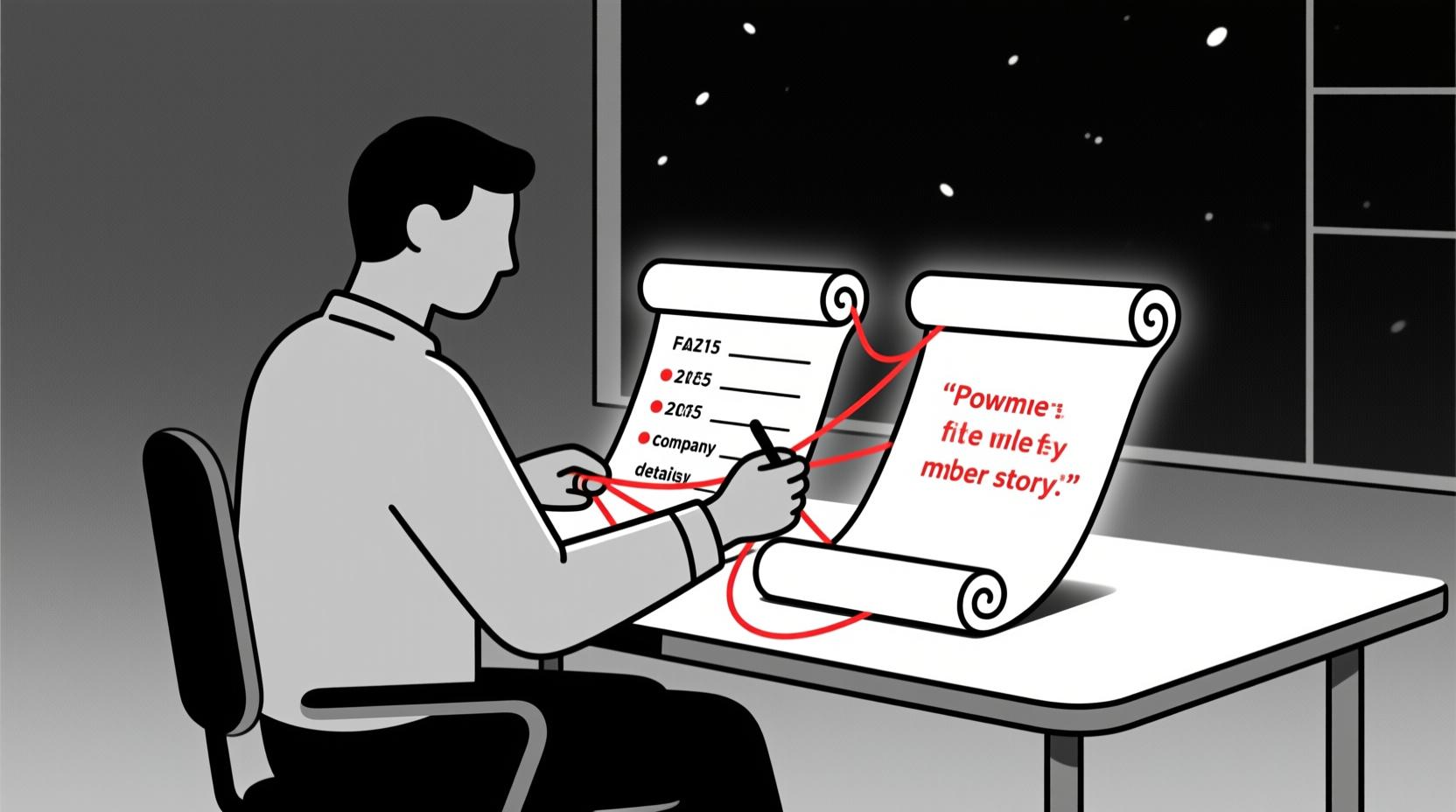
Okay, the interview is done. You now have two sets of information:
- The Facts: The original bio, company history, list of services.
- The Feelings: The rich, emotional, anecdotal quotes from your amazing interview.
The final step is to weave them together. This is where you use a more advanced prompt to synthesize everything into a cohesive narrative.
The Master Storytelling Prompt:
Act as a professional feature writer. Your task is to write a compelling 500-word member spotlight that combines factual business information with personal, anecdotal quotes.

The primary narrative angle is [Insert the angle you chose].

Weave the following two sources of information into a single, seamless story. Start with a strong narrative hook, use the quotes to provide emotional depth, and use the business facts to provide context and credibility.

Source #1: Business Facts [Paste the original bio info here]

Source #2: Interview Quotes & Anecdotes [Paste the best quotes and notes from your interview here]

End with a powerful concluding sentence that summarizes their impact on the community.
This prompt gives the AI all the ingredients and a clear recipe, resulting in a rich, layered story that you simply couldn’t get from the bio alone.
Canadian AI Guy’s Pro Tip: Transcribe and Summarize in Seconds
The most time-consuming part of any interview is processing the recording. Instead of typing it out by hand, use an AI transcription tool (like Otter.ai or the built-in functions in some AI models) and then use this prompt:
Act as my assistant. Review the following interview transcript. Your job is to pull out the 5-7 most powerful, emotional, and insightful quotes. Also, provide a bulleted summary of the key themes and turning points discussed.This turns an hour of audio into a scannable, actionable set of notes in minutes.
A Quick Note on Storytelling Strategy
Finding one great story is a fantastic start. But turning that into a consistent content strategy that drives member engagement is the next level. If you’re wondering how to build a full content calendar around your member stories or how to repurpose them for maximum impact, that’s where a deeper strategy comes in.
This is a core part of what we cover in our AI Training Programs.
If you’d like to explore building a custom AI-powered content strategy for your Chamber, you can book a free, no-pressure 20-minute discovery call.
Conclusion: From a Bio to a Legacy

The difference between a bio and a story is the difference between being listed and being seen.
When you go beyond the bio, you do more than just promote a business. You honour a member’s journey. You highlight the real human impact they have on your community. And you demonstrate your Chamber’s value in a way that no generic newsletter ever could.
AI’s true power in this process isn’t just about writing faster. It’s about helping us research deeper, ask better questions, and connect more authentically with the people we serve.
So, for your next spotlight, give it a try. Go find the treasure. 😉
And remember, if you need to brush up on the basic workflow, you can always refer back to our first post, The AI-Powered Member Spotlight Toolkit.
People Also Ask (FAQ)
1. Is it ethical to use AI to write about a real person’s story?
Yes, as long as it’s done responsibly. The ethical framework is simple: use AI to help you discover and structure the story, but ensure the final product is approved by the member and accurately reflects their words and experiences. The “human touch” polish is non-negotiable.
2. How do I handle very long interview transcripts with AI?
Most AI tools have a context limit. Instead of pasting a full, hour-long transcript, it’s better to first read through it and pull out the 5-10 most powerful quotes and key anecdotes. Feed this curated selection to the AI for a much higher quality and more focused result.
3. Can AI help me find a “theme” for a series of member spotlights?
Absolutely. You could provide the AI with links to 5-10 different member websites and use a prompt like:
Analyze these local businesses. What is a common theme or value they all share that we could build a 'Support Local' campaign around?4. What’s the biggest mistake people make when using AI for storytelling?
The biggest mistake is letting the AI lead. Never just accept the first draft. The AI is your intern, not your editor-in-chief. Always use its output as a starting point, and then infuse it with your own local knowledge, personal voice, and human insight—that’s a core philosophy you can read about on the About Rob page.
5. My member’s industry is really technical. How can AI help make it interesting?
This is a perfect use case. Feed the AI the technical information and use a prompt like:
Explain this technical concept to me like I'm a smart 10th grader. Use an analogy to make it understandable. Now, turn that explanation into a short, engaging paragraph for a community blog post.Share this:

Read more:

The 5-Minute AI Fix: Write Your Social Media Posts for the Entire Week

How to ‘Talk’ to AI: A Small Business Owner’s Guide to Better Conversations