

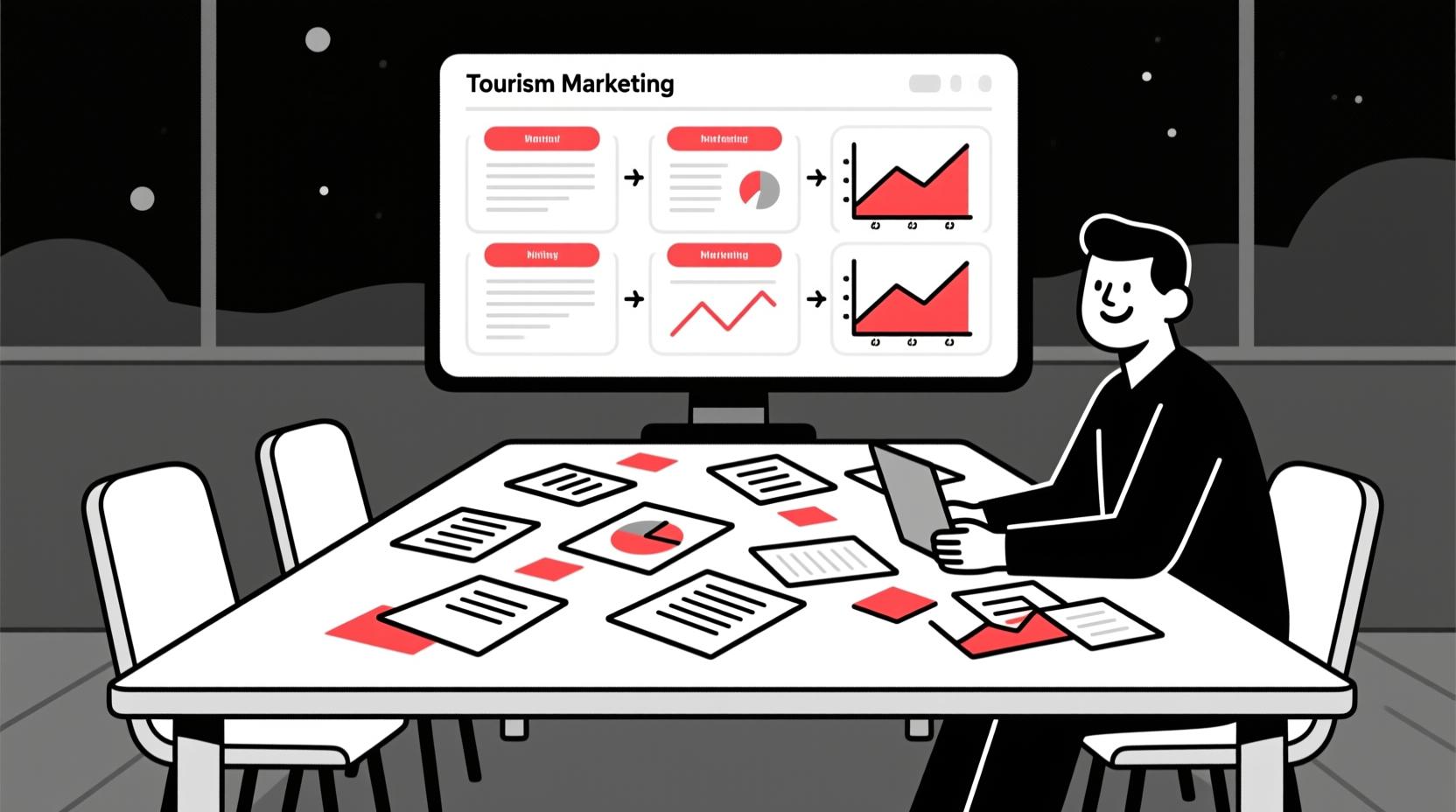
If you’re leading a DMO, you know the feeling. It’s the week before a board meeting. You have a folder with the latest Google Analytics report, an email chain with feedback from the local hotel association, and a spreadsheet of last year’s visitor survey results.
You are rich in data, but standing there, preparing to present, you feel poor in insight. You have all the pieces, but no clear story to tell.
This isn’t a personal failing; it’s the biggest challenge in modern marketing. You’re not alone in feeling overwhelmed. Marketers are swimming in 230% more data than they were in 2020, and more than half admit they don’t have the time to analyze it properly. It’s a classic case of “analysis paralysis,” where the sheer volume of information makes it impossible to find a clear path forward.
The solution isn’t another dashboard or a more complicated spreadsheet. It’s a new kind of assistant. This article gives you a simple framework for using AI as your “virtual strategist” to connect your scattered data, uncover powerful insights, and build a cohesive one-page marketing plan your board will actually understand.
The Old Way of Planning: Good Intentions, Disconnected Results

Let’s acknowledge the traditional DMO planning process. For many, it’s an annual scramble to pull together a plan based on last year’s report, a few stakeholder meetings, and a general “gut feel” for the market.
While highly sophisticated organizations like Destination BC and Travel Alberta have robust, multi-year strategies, their real advantage is having a team of people whose entire job is to connect the dots. For the average DMO with a small team and a dozen other priorities, that’s a luxury you just don’t have.
This resource gap often leads to a reactive, tactical approach to marketing. You’re so busy putting out fires and managing the next campaign that there’s no time to think strategically. As Beth Potter, CEO of the Tourism Industry Association of Canada (TIAC), points out, the sector gets tired of constantly having to “‘defending’ itself” with statistics. A true strategy lets you move from defending your existence to directing your future.
Meet Your New AI Strategist: Turning Noise into a Narrative

It’s time to reframe how we think about AI. This isn’t about asking it to write a catchy Instagram caption. This is about using AI for high-level strategic analysis—a task that was once reserved for expensive consulting firms.
Your AI assistant has three superpowers that make it the perfect partner for building your DMO marketing strategy:
1. The Connector: A human analyst can get bogged down in spreadsheets. An AI can read and synthesize thousands of words of unstructured data—like online reviews, survey responses, and meeting notes—and instantly find the hidden patterns and common themes that connect them all.
2. The Forecaster: By analyzing your website traffic, social media chatter, and even broader market reports, an AI can help identify emerging trends. It spots the subtle shifts in visitor interest, allowing you to move from reacting to last season’s trends to proactively preparing for the next one.
3. The Prioritizer: This is its most valuable skill. After analyzing a mountain of information, an AI can give you a clear, ranked list. It can cut through the noise and say, “Based on all this data, here are the top 3 opportunities and the single biggest threat you should focus on right now.”
The 3-Step Framework: From Raw Data to a One-Page Plan

Here’s where the theory becomes practice. This is a simple, three-step process anyone can use to build a strategic foundation in an afternoon.
Step 1: The “Digital Hockey Bag” Data Dump
First, you need to get your gear in one place. Think of it like packing your hockey bag before a big game. Right now, your equipment is scattered all over the house. The goal is to get it all into one bag so you can see what you’re working with.
Open a single blank document and dump your scattered data into it. Your “Digital Hockey Bag” could include:
- The top 10 positive and negative comments from your most recent visitor survey.
- A one-paragraph summary of your website traffic from Google Analytics for the last quarter.
- A handful of telling online reviews (both glowing and critical) from TripAdvisor or Google.
- Your own bullet-point notes from the last meeting you had with local tourism partners.
- The top 3 questions people always ask at your visitor centre.
Step 2: The “Strategic Synthesis” Prompt
Next, you’ll feed this entire document to your AI assistant. This is where you give the AI its mission. And don’t worry about getting generic business fluff back—because you’re feeding the AI your specific local data, its analysis will be grounded in your destination’s unique reality.
Canadian AI Guy’s Pro Tip: Don’t just ask, “What does this mean?” Give the AI a specific role and a clear structure for its response. Copy and paste this powerful prompt into Gemini or ChatGPT after you’ve pasted your data:
"Act as a world-class marketing strategist for a Destination Marketing Organization. I have provided you with a 'Data Dump' containing raw data from various sources related to my destination.

Your task is to analyze all of this information and produce a concise, one-page strategic marketing plan. The plan must be easy for a non-marketing board member to understand. Structure your response using the following headings only:

1. Our Current Situation: A 2-3 sentence summary of the key findings from the data.
2. Our Top 3 Opportunities: Based on the data, what are the three clearest and most impactful marketing opportunities we should pursue?
3. Our Biggest Potential Roadblock: What is the most significant challenge or threat the data reveals?
4. Recommended Strategic Focus for the Next 6 Months: A short, actionable paragraph outlining the main marketing priority."
Step 3: The “One-Page Plan” and Your Board Meeting Talking Points
Within moments, the AI will process your prompt and generate a clear, concise, and incredibly valuable document. It takes your messy, scattered notes and transforms them into a professional strategic summary. This one-page plan is the perfect document to bring to your next board meeting.
But you don’t have to stop there.
Canadian AI Guy’s Pro Tip: Now that you have your plan, you need to present it with confidence. Use this follow-up prompt to instantly turn your new strategy into compelling talking points.
"Act as an expert communications coach. Take the one-page strategic plan above and turn it into 3 clear, confident talking points for me to present at a board meeting. For each talking point, include the key data point that backs it up. The tone should be strategic, optimistic, and focused on results."Conclusion: From Defending to Directing Your Future
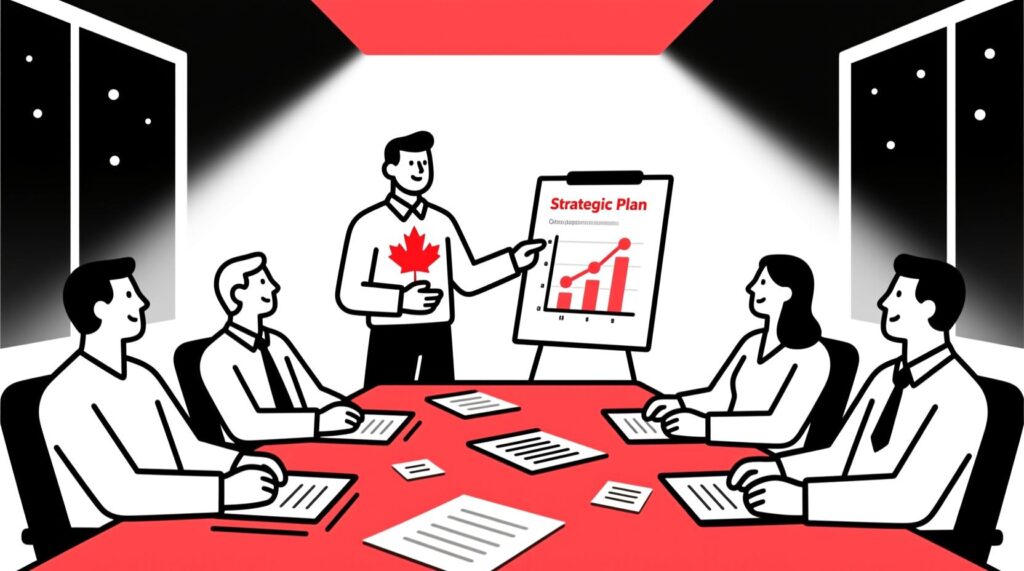
Let’s recap the transformation. You started the day with a digital hockey bag full of disconnected data. Now, you have a clear, evidence-backed one-page strategic plan and a set of confident talking points to present it. You didn’t need a team of analysts; you just needed to ask the right questions.
This is what moving from “data-rich, insight-poor” to truly data-driven feels like. As Meaghan Ferrigno, Chief Data and Analytics Officer at Destination Canada, puts it, AI gives us new ways to leverage information, enabling us to “have a conversation with the data and unlock insights that would have previously remained hidden.”
Now that you have a strategic plan, the next step is getting it funded. In our next post, we’ll dive into exactly how to use these AI-powered insights to build a board-approved budget and justify every dollar of your marketing spend.
People Also Ask
1. What does it mean to be “data-rich, insight-poor”?
This common business challenge describes having access to large amounts of data from various sources (like website analytics, customer surveys, social media) but lacking the time, tools, or expertise to connect that data to find actionable insights that can guide strategy.
2. How can AI help with marketing strategy if I’m not a data scientist?
Modern AI tools, like large language models, can analyze and synthesize unstructured text and data. You can provide them with raw data in plain English (e.g., copied-and-pasted reviews, reports) and ask strategic questions to get a summarized analysis of key themes, opportunities, and threats without needing technical skills.
3. What is the first step in creating a data-driven marketing plan for a DMO?
The first step is to gather your existing, scattered data into one place. This doesn’t require complex software; simply consolidating key points from your Google Analytics, visitor surveys, online reviews, and partner feedback into a single document is a powerful starting point.
4. Why is a cohesive marketing strategy important for a DMO?
A cohesive, data-driven strategy allows a DMO to move from reactive, tactical marketing to proactive, long-term planning. It ensures marketing spend is focused on the highest-impact opportunities, helps align stakeholders and board members, and makes it possible to prove a clear return on investment.
5. Can AI predict tourism trends for my destination?
Yes, AI can analyze vast amounts of data from sources like social media, search trends, and booking patterns to identify emerging visitor interests and forecast potential shifts in demand. This allows DMOs to anticipate market changes and adjust their strategies proactively.
Share this:

Read more:

The 5-Minute AI Fix: Write Your Social Media Posts for the Entire Week

How to ‘Talk’ to AI: A Small Business Owner’s Guide to Better Conversations