

Let’s talk about the leaky bucket. For the average Canadian non-profit, it’s losing water at an alarming rate. Recent data shows that the average donor retention rate is a dismal 43%. For first-time donors, it’s a catastrophic 23.5%.
Your organization is likely losing more than half of its supporters every year. But the reason why will infuriate you.
It’s not their finances. It’s our follow-up. According to CanadaHelps, the top reasons donors leave are entirely preventable: they were never thanked, they weren’t shown their impact, or the communication felt impersonal.
For a busy Executive Director, this isn’t a gratitude problem; it’s a capacity problem. But what if you could build a system to fix it?
This guide will show you how to build your AI-Powered Stewardship Engine—a system for creating personal, impactful thank-yous that make donors feel seen, appreciated, and eager to give again.
Part 1: The Engine’s Blueprint – The 3 Levels of Gratitude
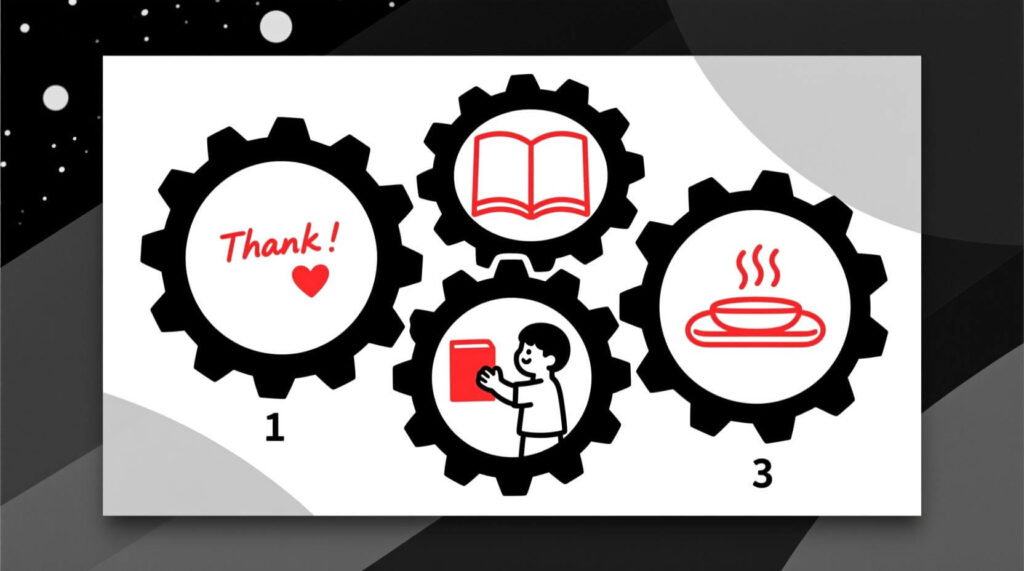
Your Stewardship Engine has three gears. Mastering them will take you on a journey from simply plugging the leak to building a loyal community of advocates.
Level 1: The Prompt & Personal Thank-You (Fixing the Biggest Leak)
The Goal: To solve the #1 reason donors leave. Data shows donors thanked within 48 hours are four times more likely to give again. This level is about speed and sincerity.
Your “Level 1” Prompt:
"Act as my non-profit's stewardship coordinator. Draft a warm, appreciative, and personal thank-you email for the following gift: **Donor Name:** [Jane Smith] **Gift Amount:** [$50] **Gift Date:** [September 21, 2025] **Donation Program:** [General Operations Fund] Keep it under 150 words. The tone should be sincere and deeply grateful."Level 2: The Impact-Focused Thank-You (Forging a Connection)
The Goal: To solve the #2 reason donors leave—not knowing their impact. This level connects their specific gift to a tangible, mission-driven outcome.
Your “Level 2” Prompt:
"Act as my non-profit's stewardship coordinator. Draft an impact-focused thank-you email. **Donor Name:** [Michael Johnson] **Gift Amount:** [$100] **Donation Program:** [Youth Literacy Program] **IMPACT:** **This is critical:** His $100 donation will provide 15 new books for children in our after-school reading club. **Task:** Write a heartfelt thank-you that specifically connects Michael's $100 gift to the purchase of 15 new books. Help him visualize the impact he's making."Level 3: The Relationship-Building Thank-You (The Unexpected Update)
The Goal: To solve the “poor communication” problem with a surprise-and-delight moment. This is a non-ask update that builds immense goodwill.
Your “Level 3” Prompt:
"Act as my non-profit's stewardship coordinator. Draft an impact-focused thank-you email. **Donor Name:** [Michael Johnson] **Gift Amount:** [$100] **Donation Program:** [Youth Literacy Program] **IMPACT:** **This is critical:** His $100 donation will provide 15 new books for children in our after-school reading club. **Task:** Write a heartfelt thank-you that specifically connects Michael's $100 gift to the purchase of 15 new books. Help him visualize the impact he's making."Part 2: Operationalizing Gratitude – Your Weekly Stewardship Ritual
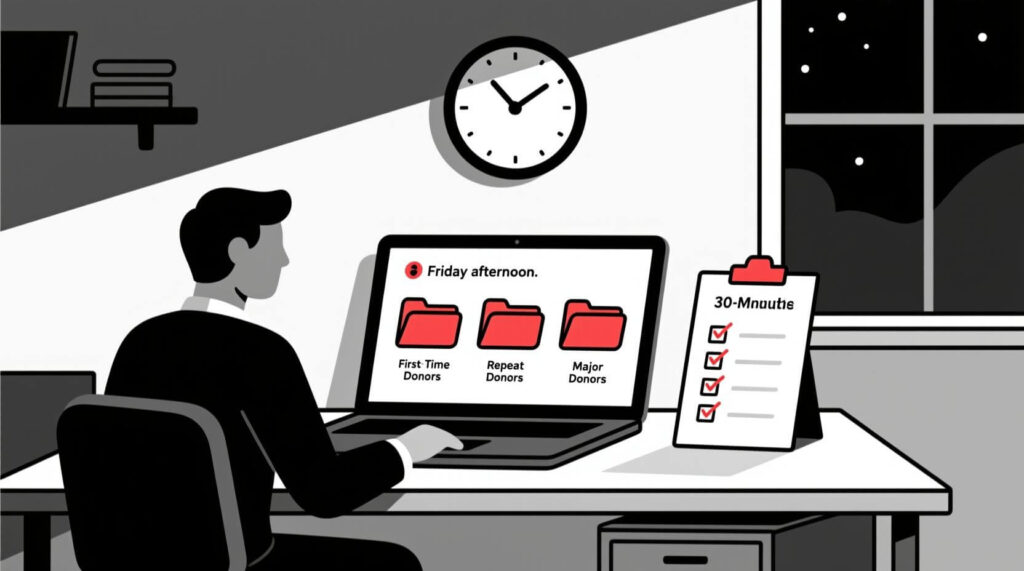
An engine needs a schedule to run. Prompts are useless without a process. Here is a simple ritual to turn this from a good idea into a powerful habit.
Your 30-Minute Friday Afternoon Ritual:
- (5 mins) Pull the List: Export a list of all donors who gave in the past week from your database or payment processor.
- (5 mins) Triage & Segment: Quickly sort the list into three groups: First-Time Donors, Repeat Donors, and Major Donors ($500+ or your equivalent).
- (15 mins) AI-Powered Drafting:
- All First-Time Donors get a Level 1 Thank-You, batched for efficiency.
- All Repeat Donors get a Level 2 Thank-You, with specific impact details.
- Pick ONE Major Donor for a Level 3 update or a personalized call/note (see next section).
- (5 mins) Review & Send: Quickly proofread the AI drafts for tone and accuracy, then send them out.
This simple, repeatable process ensures no donor ever feels ignored again.
Part 3: The Stewardship Multiplier – Empowering Your Board & Volunteers

You can’t do it all alone. The ultimate pro move is to turn your board members and dedicated volunteers into a gratitude army.
The AI Workflow: Use AI to create a simple “Thank-You Toolkit” that you can give to them.
Your “Toolkit Creation” Prompt:
"Act as an expert fundraising coach. I need to create a 'Board Thank-You Toolkit' to help my board members make thank-you calls to donors. Please create the following: **1. A simple 3-point call script:** It should be short, sound natural, and focus on expressing gratitude, sharing a quick impact story, and asking for nothing. **2. A list of 5 'Frequently Asked Questions'** that a donor might ask, with simple, positive answers. **3. A sample email template** they can send as a follow-up after their call."By equipping others with AI-generated tools, you multiply your stewardship capacity without spending a dime.
Canadian AI Guy’s Pro Tip: Your Stewardship Command Centre
Here are the essential prompts from this playbook. Save these—this is your new toolkit.
1. The Level 1 Prompt (Prompt & Personal):
"Act as my stewardship coordinator. Draft a warm, appreciative thank-you email for: Donor [Name], Amount [$X], Date [Date], Program [Program]. Keep it under 150 words and make it sincere."2. The Level 2 Prompt (Impact-Focused):
"Act as my stewardship coordinator. Draft an impact-focused thank-you for: Donor [Name], Amount [$X], Program [Program]. CRITICAL IMPACT: [Describe the specific, tangible outcome of their gift]. Connect the gift directly to the impact."3. The Level 3 Prompt (Relationship-Building):
"Act as my donor relations manager. Draft a non-ask email update for a past donor: Name [Name], Past Giving Area [Area]. Success Story: [Share a recent win they helped make possible]. Make them feel like a valued partner."4. The Board Toolkit Prompt:
"Act as an expert fundraising coach. Create a 'Board Thank-You Toolkit' including: 1. A simple 3-point call script (gratitude, impact story, no ask); 2. A 5-point FAQ for board members; 3. A sample follow-up email template."Conclusion: From Transaction to Transformation

An exceptional thank-you isn’t an administrative chore; it’s a high-impact fundraising strategy. Legendary researcher Penelope Burk found that 41% of donors who received an exceptional thank-you said it influenced them to give again.
By building an AI-powered stewardship engine, you’re not just sending emails. You’re building a system of gratitude that creates loyalty, boosts revenue, and builds a sustainable future for your mission.
Your Challenge: Start your first Weekly Gratitude Ritual this Friday.
Canadian AI Guy’s Pro Tip: Want to build a complete AI-powered fundraising system? Our AI for Non-Profit Leaders coaching program can help you integrate these stewardship strategies with your donor database and communications calendar for maximum impact.
People Also Ask (FAQ Section)
1. Is an AI-generated thank-you email personal enough?
It is if you provide personal details. The magic of this system is that you feed the AI specific information (name, amount, impact). The AI is your writing assistant; the personalization comes from the unique data you provide.
2. How can I scale this process for a large number of donors?
The “Weekly Gratitude Ritual” is designed for this. Use Level 1 and 2 prompts to create perfect templates for donor segments, then you only need to change the names and small details. Reserve highly unique prompts for your major donors.
3. Can AI help me write a script for a thank-you phone call to a major donor?
Absolutely. Use the “Board Toolkit Prompt” but tailor it for yourself. The key is to ask for a script that sounds natural and unscripted, focusing on just a few key talking points.
4. What’s the best way to handle thanking anonymous donors?
Use a “public” Level 2 thank-you on your website or social media: “To the anonymous donor who gave $500 to our shelter yesterday: your gift will provide a week of safe, warm shelter for a woman in crisis. Thank you for your incredible generosity.”
5. Can AI help me write a thank-you letter for an in-kind donation?
Yes! Just change the inputs in the Level 2 prompt. For example: “Donor: [Local Bakery]. Contribution: [Donated 10 dozen muffins]. Impact: [Ensured 60 of our clients started their day with a warm meal].” The principle of connecting action to impact is universal.
Share this:

Read more:

The 5-Minute AI Fix: Write Your Social Media Posts for the Entire Week

How to ‘Talk’ to AI: A Small Business Owner’s Guide to Better Conversations